
Values & principles
These are the guiding principles and commitments that shape how I show up when I hold space for others.
Experience before interpretation
My primary role, first and foremost, is a facilitator of deeper experiential awareness. I prefer to stay with the sensory and phenomenological layer of experience a bit longer, and move through it a bit slower, than most people are used to — being with it and getting to know it thoroughly, before rushing to find words to explain it. I believe that the more deeply we can be with raw experience, the more and richer data we could have when it comes time for an interpretation to be attempted.
It is not my job to interpret any part of your experience, your history, or the personal implications for you of whatever arises when we are engaged in a practice together. I am instead interested in your worldviews, your ways of making meaning, how and what you notice and orient yourself towards. When I offer interpretations or frameworks from personal experience, they are always using owned language (“this has been helpful for me”, “this has been my experience”, “being with you, I am reminded of this”) so it is clear that they are mine, rather than facts about you. This kind of sharing is only offered when requested, and is fundamentally a relational move, not an interpretative one.
Humility about what we know
Having a particular training, vocabulary or professional role does not make one inherently an authority over another person’s experience and self-understanding. All it means is — I have learned to read a particular kind of map. It’s possible that none of the maps I know how to read is appropriate for you, and that is perfectly fine, because I am more interested in getting to know yours.
I relate to almost all diagnoses, labels, identity constructs and vocabulary whose purpose to categorise or define some aspect of human experience, as maps — representations of reality, rather than reality itself. I like to ask: how do you read this map? What does it mean for you that you read it this way? Being here and looking at this map together, what do you notice? Of course, there is no right or wrong answer, nor is there any right or wrong map to hold.
Maps are useful, and they can also mislead us, when we start to trust the map more than our own bodily senses, and mistake the map of the terrain for the terrain itself. The terrain which is human life is messy and complex, and no single mapping system is capable of capturing every layer of it.
Relational and ecological awareness
When being with another person and bringing my genuine curiosity into connection, I tend to be more curious about how they are and who they become in relationship, and what is present for them as they interact with the world, than about what is happening “purely” on the inside.
What are you noticing, being with me, being in this place? What captures your attention? What impacts you? How are you being impacted? Which relationships in your life are most important to you? Which have helped shape your perspectives and values the most?
I see humans as relational beings that are inseparable from the world — from relationships with other beings. In order to really “get” you, it is important for me to understand the context which has shaped you — interpersonally, culturally, institutionally, somatically, ecologically.
Creating conditions instead of fixing, directing or intervening
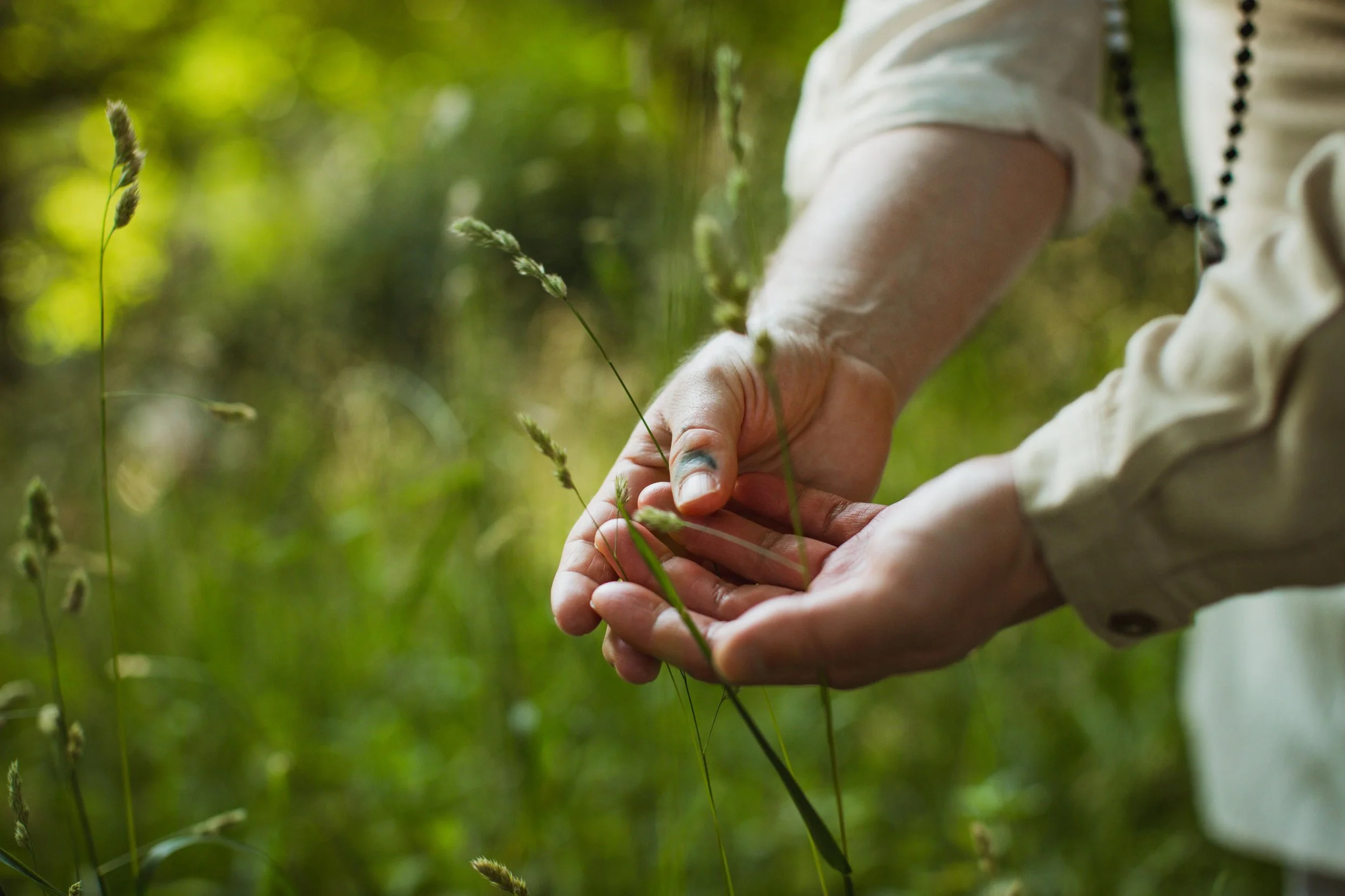
If a fruit tree in our garden is not producing any fruit this year, do we blame it for being “difficult”? Or, do we ask ourselves: what might it be needing of support and nourishment from the outside world, that it hasn’t received enough of recently? And how can we — not as a quick-fix or one-time event, but as an ongoing practice, as a commitment to caring for another being that nourishes our bodies in return — offer it a little something extra during these challenging times?
We do this as a practice, not knowing exactly what will happen, and when it will happen — because growth can’t be forced, and forceful actions are rarely ones that can be sustained in the long term.
The life challenges that people bring to me are like this fruit tree. I meet you with caring presence and compassionate action, because this is the path that I am committed to; I have no agenda or expectation for you to show up or change in any particular way.
Cultural relativity & reflexivity
Having blind spots is an inevitable part of being human, particularly when it comes to the maps we hold, that shape how we make sense of the world and other people. Every relational encounter with another person who holds a different configuration of maps, is also for me an opportunity to increase awareness around my own. It is not just “I help you increase your awareness”, the learning and growth is always mutual. I am very open to feedback and receive them with gratitude, when assumptions and projections I make unconsciously have impacted another person.
I am generally very open about personal details that I am aware of, can have a large impact on what kind of maps I hold — such as countries and cities I’ve lived in, languages I speak, communities and subcultures I’ve been a part of, my social location, my education and training and employment history. If there is something more you want to know about the context of what shaped me, just ask, I am happy to answer.