
Co-Facilitated Relationship Counselling
Couples and relationship counselling with two practitioners who are also a couple — in Oslo, Norway & online worldwide
What’s it like to be us, right now?
Do you sometimes look back on the beginning of your relationship and wonder “where did the good times go”? At what point did deep and profound connection turn into repeated arguing over money and chores? When did the “spark” of soulmates turn into negotiations between housemates?
When two (or more) people come together, something is created in this meeting — “you” and "I” join to form an “us”. In the early stages of an intimate relationship, it is common for those involved to dedicate a lot of time and space to nurturing the “us”: talking about us, feeling into us, prioritising us over most other things that are competing for our time and energy. “Us” grows — as it receives consistent, curious, loving attention from each individual.
The practical demands and stressors of daily life can quietly wear us down, turning us into a project to be managed rather than a beautiful phenomenon to be inhabited and experienced. When conflicts over seemingly “small things” reappear, we might suddenly find ourselves thinking: what even is the point of us? What have we become? Do I even still like us?
When was the last time you dedicated an undisturbed period of time, just to be together in your “us”?
What if one of the reasons we “lose the spark”, or become vulnerable to unhelpful patterns and conflicts, is simply that we stopped spending enough quality time with “us”? Stopped actively sharing with each other, the important questions and feelings we have about us? And what would it be like, to have a dedicated time container on a regular basis, to do all those things, to nurture and care for us, and to be met and witnessed as us — by another pair who is also on the journey of nurturing their own “us”?
What if nothing is actually wrong with us?
It is a very human instinct to perceive tension as a sign of something “wrong”, and differences in background and personality as problematic when they often lead to conflicts. It’s very understandable, particularly while living in such stressful times in history, to want a domestic life with as little tension and conflict as possible — and, at the same time, we may risk holding ourselves and each other to unrealistic standards.
When we observe nature, we can see that Planet Earth is simultaneously home to many polarities — light and dark, hot and cold, soft and hard, birth and death, cooperation and competition, merging and dividing — our planet is all of those things at once, in constant dynamic movement. The presence of polarities and the tension they often generate when they meet isn’t inherently a problem, it is what makes our planet what it is — alive.
Maybe your challenging differences and recurring tension points are not a problem to be solved, but instead a part of what it is to be this particular “us” right now — and maybe what this “us” needs the most, is to be met — with presence and attention that does not rush to impose moral judgement or quick fixes.
What happens to “us” when we declare some part of us as wrong or bad?
What happens if we instead try: we don’t have capacity to stay present with this aspect of us right now?
One way to increase capacity around a difficult topic, is to have more people — more bodies — holding it with you. What would it be like to try being with your recurring or deeper conflicts, while being supported by the presence and attention of another pair?
This might be for you if…
You still care deeply about each other, and somehow life has become more about getting things done than spending time being together.
You feel disconnected, are drifting apart, have “lost the spark”, or find yourself wondering whether the relationship still makes sense.
Your relationship brings together different backgrounds, cultures, languages, identities, values, family expectations or ideas about what it means to love someone and build a life together.
Your relationship doesn't fit conventional expectations of what a couple or partnership is supposed to look like, and you want a space where you can explore the relationship you actually have, rather than having to explain or defend its shape.
You want space to explore what's happening in your relationship without being given a “diagnosis” of who you are, why you behave the way you do, or what your relationship is supposed to look like.
You would like your individual counselling and relationship counselling to be part of the same ongoing process, rather than having to hold these different parts of your life with entirely separate practitioners.
You might arrive with thoughts like…
“We keep saying we'll make time for each other when things are less busy, but that day never comes.”
“Are we going through a phase, or have we become people who want different things?”
“Nothing particularly bad has happened between us. So why am I wondering whether this is still what I want?”
“We sometimes seem to mean completely different things when we use the same words, it’s so frustrating.”
“I want us to be able to talk about our differences without having to defend who we are or where we come from first.”
“We don't really have anyone we can turn to when things get difficult between us. We don't want someone to tell us who's right or what's wrong with us, just a place to be where we don’t have to work though it alone.”
“I also want space to figure out what I'm feeling on my own, without that becoming completely separate from the work we're doing together.”
Two practitioners, alongside you
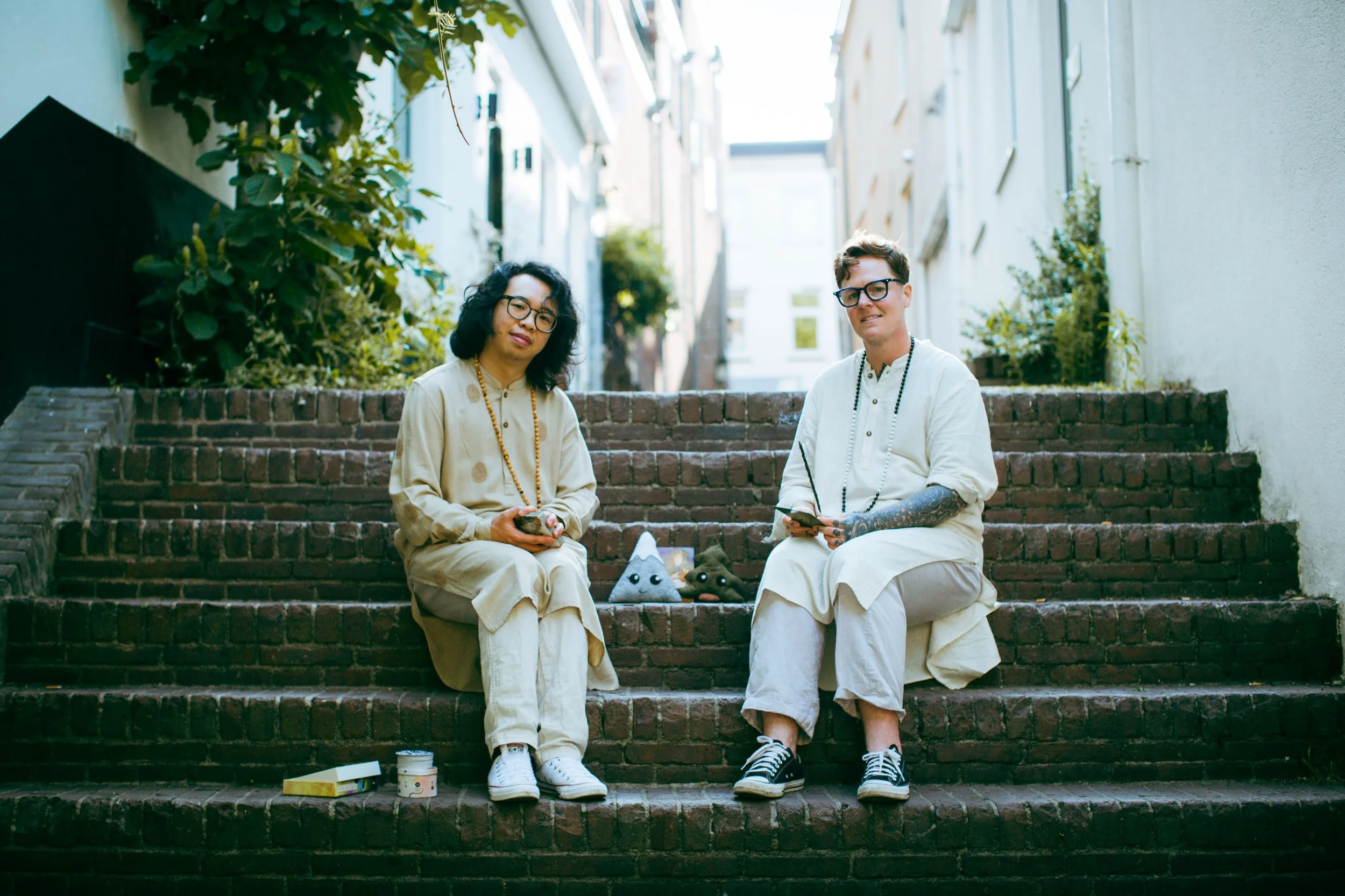
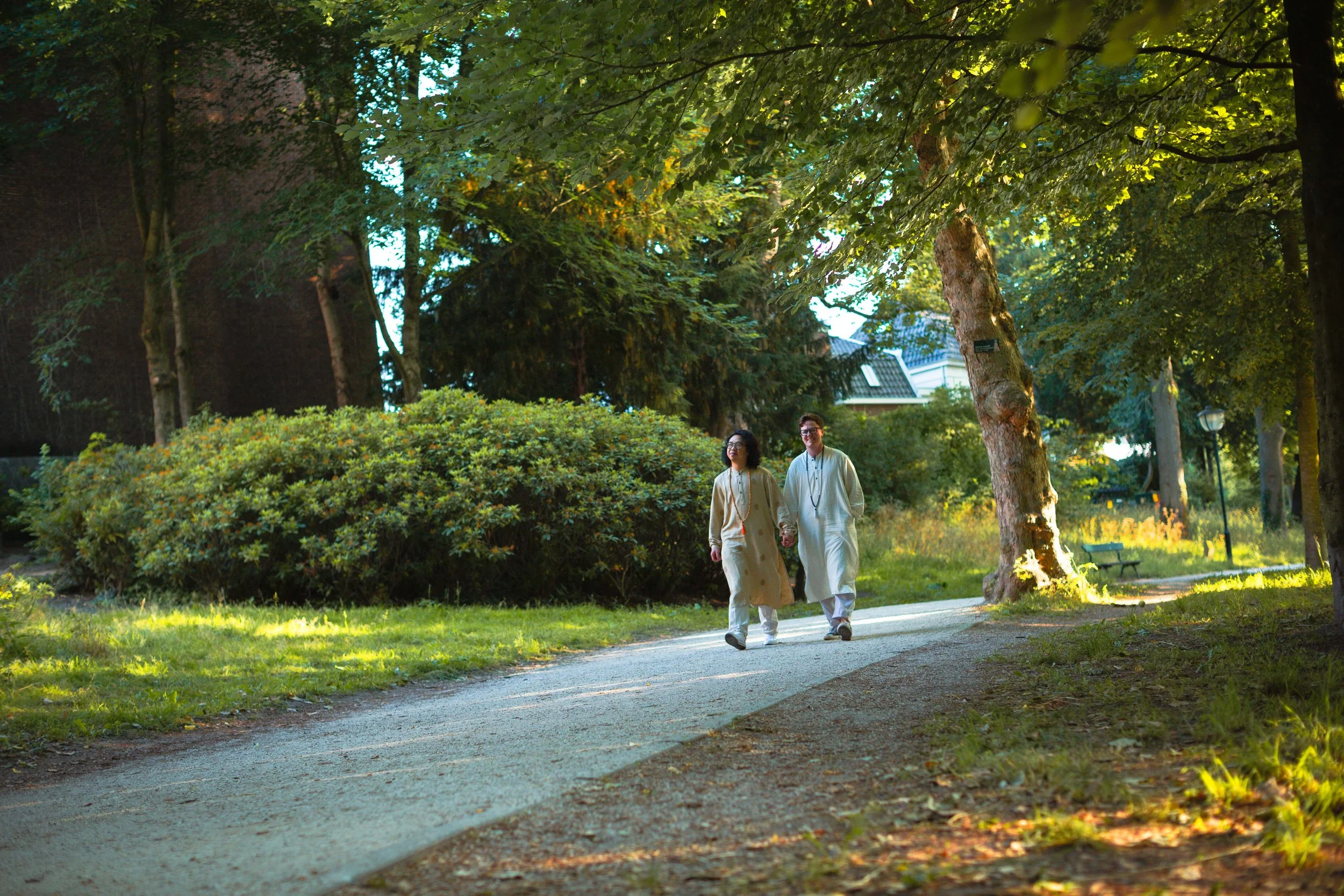
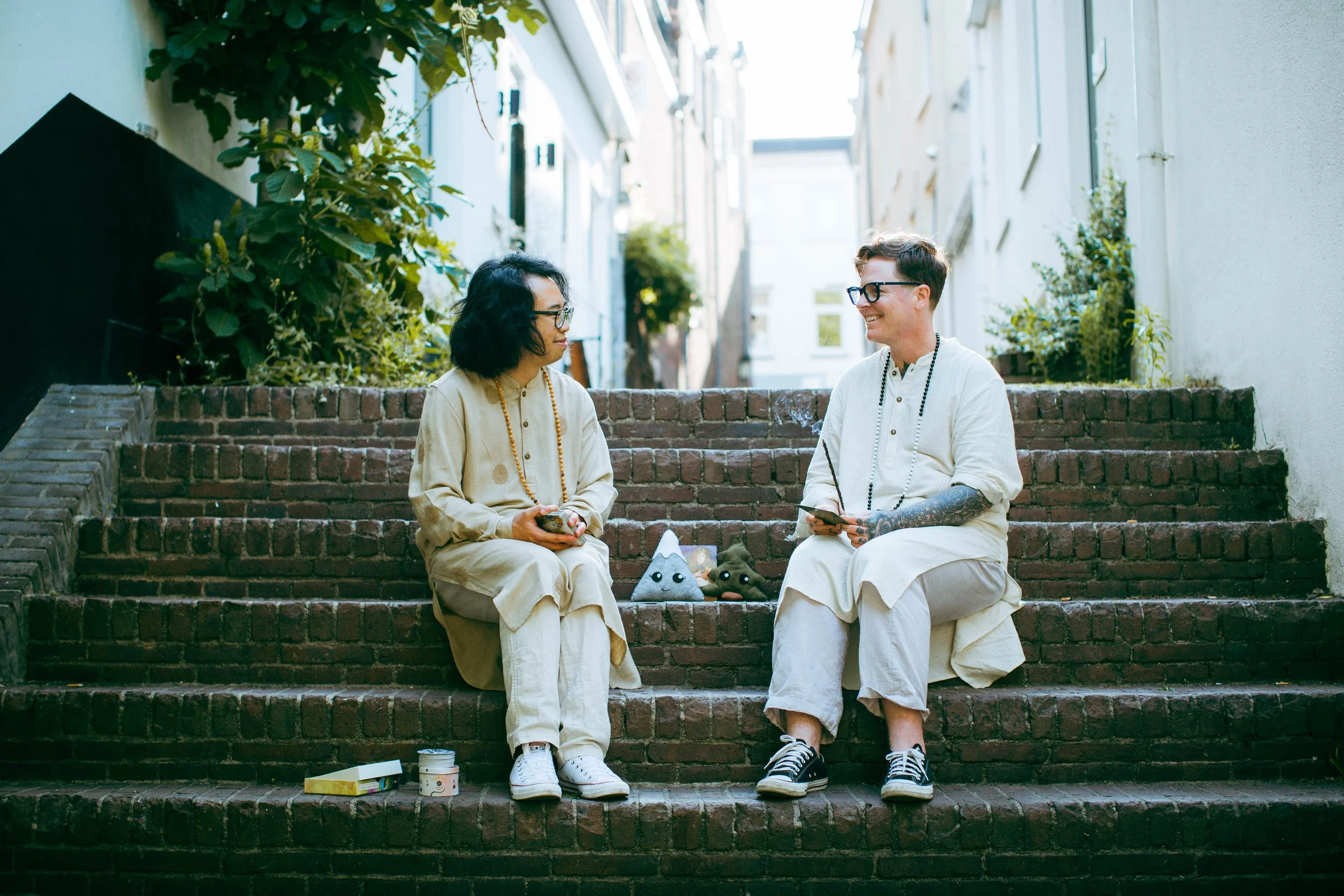
We are Kirien Eyma and Soren Stone, partners in life and work, and we hold space for couples and people in close relationships together. We met through a shared interest in this type of work, and life keeps testing us on our ability to embody the practices that we share with the world — first and foremost, in how we are with each other, when chores and spreadsheets and to-do lists take over, and the different cultural and linguistic worlds we come from meet in a head-on clash.
We do not position ourselves as experts on your relationship, or on relationships as a whole. What we bring is a particular way of paying attention, noticing, and staying present — especially when things become challenging.
What are the sessions like?
Sessions are always with both of us present. We start with some gentle guidance to allow all of us to arrive more fully in the shared space. After that, the floor is yours — to bring any topics you want, or just whatever shows up in the moment.
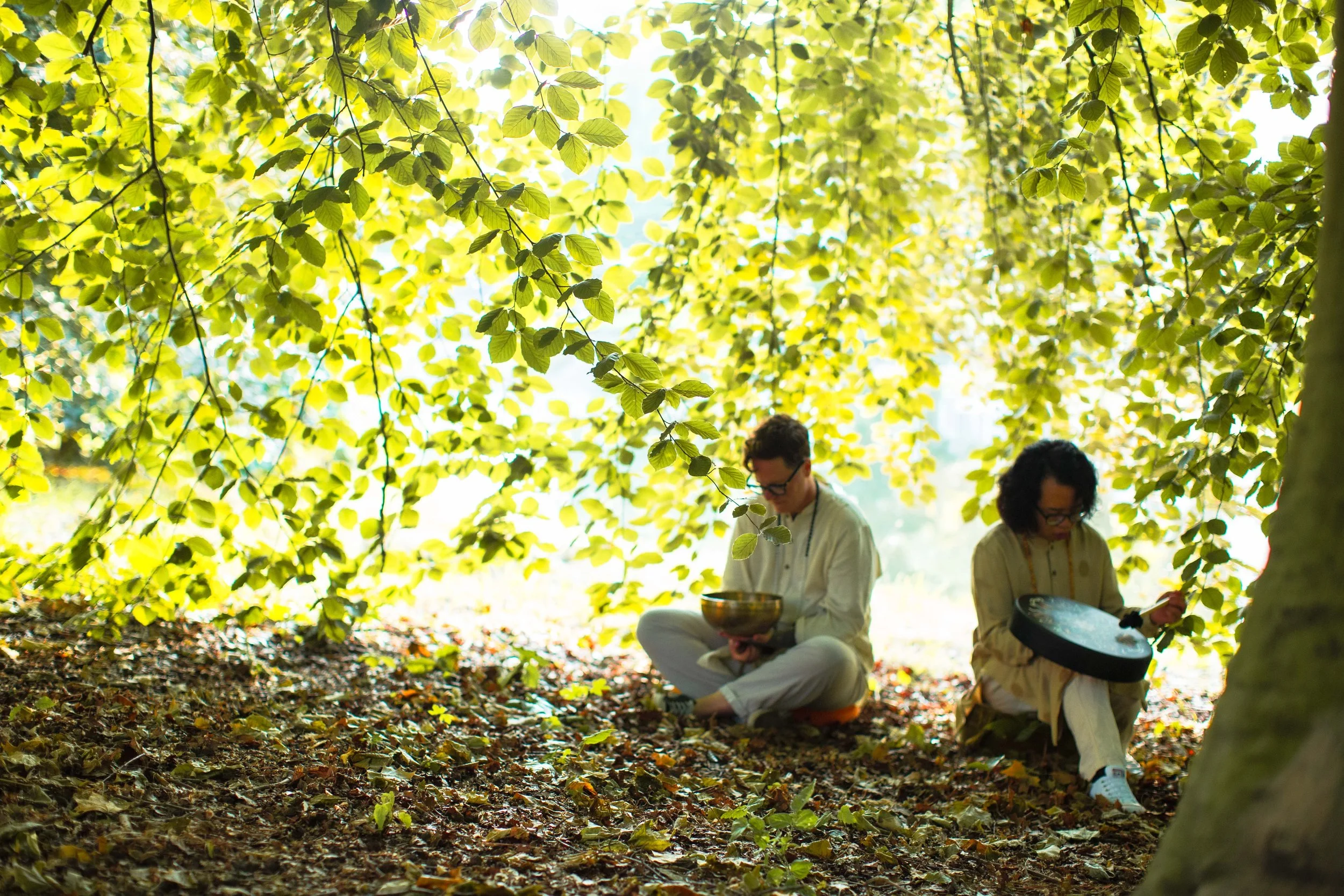
We see your “us” as the object of our meditation. We bring our curiosity as co-participants in the group, exploring alongside you — what’s it like to be your “us” right now? Each of us will likely notice different things, and we may share them — what draws our attention, what we become curious about, how what you bring is impacting us. We might also suggest some experiments or activities to try out if it seems helpful. Sometimes we demonstrate something with each other first, and then invite you to try it out for yourselves.
The primary influences for this way of working come from Authentic Relating, Gestalt therapy and other relational mindfulness practices.
More practicalities
Sessions can be in Oslo or online.
A standard session is 90 minutes, for 2500 NOK / €230 EUR. Sessions may also be longer if desired. Reduced rates are available on a limited basis.
We also offer full-day relationship intensives (8+ hours — ditch the clock completely!) for 19,500 NOK / €1800, either as a standalone experience or alongside ongoing shorter sessions. (more info here).
We’ll also give you access to Soren’s hand-crafted online course, Tending the Relationship Garden, as reference material and support between sessions. Many of the activities we introduce in sessions are also found here.
When you also need individual support
Are you tired of having to spend time catching your individual therapist up on what happened in couples therapy, and then vice versa? Do you sometimes wish your individual therapist had more context for what happens between you, when supporting you to work through something that affects how you show up in your relationship?
We also offer the possibility for couples (two persons) who are working with us on their relationship, to have individual sessions alongside the shared work — one person with Kirien and one person with Soren. This time can be used to deepen into something that came up in the group sessions which requires more focused attention, an individual topic that affects the relationship, or even something entirely unrelated to the relationship.
Sometimes one or both of you may find that you prefer meeting with one or the other of us — based on shared lived experience, cultural or other background, or the way we communicate and process things. Individual sessions can then become a place to explore those aspects of who we are that very much affect how we show up in relationship, but can be challenging to describe to someone who does not have the shared context.
We can find a regular rhythm for the individual sessions that works alongside the shared sessions and feels suitable for everyone. For example, you might meet with us individually on alternating weeks. Individual sessions are normally around 60 minutes, with longer sessions possible when more time would be useful.
Two 60 minute individual sessions, one with each of us, cost 2000 NOK / €185 EUR together.
We'll also agree together on how information from individual sessions may be shared in our shared sessions, based on your individual and shared preferences. When we meet together again, our focus returns to your “us”; and we will not be taking sides.
For relationships involving more than two people, we can discuss whether individual sessions would be useful and how to arrange them within the wider work. The structure, cadence and pricing can be agreed together, depending on the people involved and what would support the relationship.

Let’s explore what is possible together
If this form of couples counselling sounds like it might be a good fit for you, we warmly invite you to start by meeting with us, for free, for an hour — and together we will discover, whether our “us” is a good fit for your “us”, and vice versa.
During this time, you are welcome to share your story, motivations and goals; ask us questions about our background, our relationship, how we work; bring a current challenge in your relationship and experience how we work with it; or really anything that would be helpful for you. Our intention is for you to get a genuine sense of how we work and what it is like to have us hold space for your relational process, not only by talking about it, but also demonstrating it.
Questions you may have
-
Co-facilitated relationship counselling is a form of couples and relationship counselling offered by Kirien Eyma and Soren Stone, who are partners in life and work. We are both present during sessions with couples.
Our work is experiential and relational: we make space to explore what your relationship is like, the meanings you make together, and how you can become more able to be with what is difficult without rushing to decide what is wrong or what needs to change.
You might have found this page by searching “couples therapy with two therapists” or “two-on-two couples therapy”. Although we mostly work with couples, we are very open to relationship constellations with more than two people.
-
We welcome LGBTQIA+ relationships, polyamorous and consensually non-monogamous relationships, intercultural and international relationships, long-distance relationships and other relationship constellations, including forms we haven't named here. We both have lived experience, separately and together, with most of these situations :)
For relationships involving more than two people, we can discuss together what format would work best.
-
Co-facilitated sessions are always in English, individual sessions with Kirien can also be in Norwegian.
-
You can book a free 60-minute intro meeting with both of us. It's a chance to meet us, ask questions about how we work, share a little about what brings you here, and get a feel for whether this might be a good fit. You don't need to arrive with a clearly defined problem or make a decision about continuing during the meeting.
-
Of course. We can make space to explore what's happening in the relationship, the meanings you've made of it, and what you each want or don't yet know. Our role isn't to decide whether you should stay or leave, but to accompany you as you explore these questions together.